Radio Access Network Solutions

Tejas Networks provides scalable Radio Access Network (RAN) solutions for high‑performance 4G LTE and 5G deployments. The portfolio includes Base-Band Units (BBU), Radio Units (RU), RRHs and Advanced Antenna Systems (AAS), enabling flexible deployment across centralized, distributed and hybrid RAN architectures. With advanced MIMO configurations, multi‑band support and high spectral efficiency, the solutions are optimized for dense urban as well as rural and low‑density environments. Built on industry standards, Tejas RAN ensures interoperability, scalability and reduced total cost of ownership, empowering operators to deliver reliable, future‑ready mobile connectivity.

A Radio Access Network (RAN) forms the access layer of mobile networks, connecting user devices to the core network through radio technologies. It includes the radio units deployed at cell sites, baseband processing elements, and the transport connectivity that binds them together to deliver reliable wireless access.

As mobile networks evolve from 2G and 3G to 4G LTE and 5G, RAN architectures continue to adapt to growing demands for capacity, latency, and flexibility. Modern RAN deployments also explore distributed and selectively disaggregated architecture models, separating radio, baseband, and centralized processing functions in certain scenarios to improve scalability, operational efficiency, and support diverse service requirements.

In the 5G‑Advanced phase, RAN evolution is increasingly focused on enhancing network intelligence, efficiency, and service differentiation. Capabilities such as AI and ML‑assisted RAN optimization, improved energy efficiency, support for reduced‑capability (RedCap) devices, Non-Terrestrial Networks (NTN), and new connectivity models such as Ambient IoT are shaping how radio networks are designed and operated.

Looking further ahead toward future mobile generations, including 6G, RAN evolution is expected to emphasize deeper AI‑driven operation, tighter integration between communication, computing, and sensing functions, and increased reliance on intelligence across the network. These directions will further influence how radio access networks are architected and how transport and aggregation infrastructures support emerging applications and services.

Tejas Networks provides a RAN portfolio designed to support scalable deployment, reliable performance, and operational efficiency.

Key Highlights

High‑Performance Coverage and Capacity Across Bands
Supports single‑band and multi‑band deployments with advanced RF design and Massive MIMO, enabling strong coverage and capacity across diverse environments.

Advanced MIMO and High Spectral Efficiency
Delivers high throughput and spectral efficiency using advanced MIMO configurations (up to 64T64R) and optimized radio performance.

Open, Standards‑Compliant RAN Architecture
Supports O‑RAN 7.2x interfaces for interoperability, enabling flexible integration across multi‑vendor RAN deployments.

Multi‑Technology and Multi‑RAT Support
Supports LTE, 5G NR, NB‑IoT, and legacy technologies on a unified platform, simplifying migration and network evolution.

Integrated Transport and Cell Site Routing
Incorporates cell site routing and packet transport capabilities to simplify deployment and reduce external infrastructure requirements.

Energy‑Efficient Design and Lower Total Cost of Ownership
Optimized for power efficiency and compact deployment, helping reduce operational costs across large‑scale network rollouts.

Products

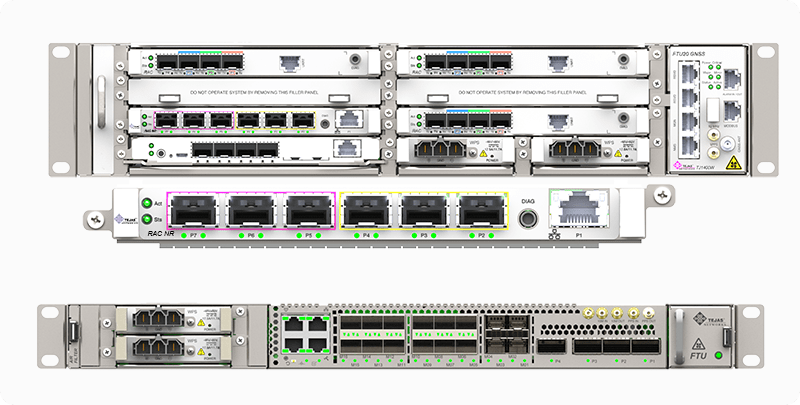
Tejas 4G/ 5G Base Band Unit

Tejas 4G/ 5G Base Band Unit

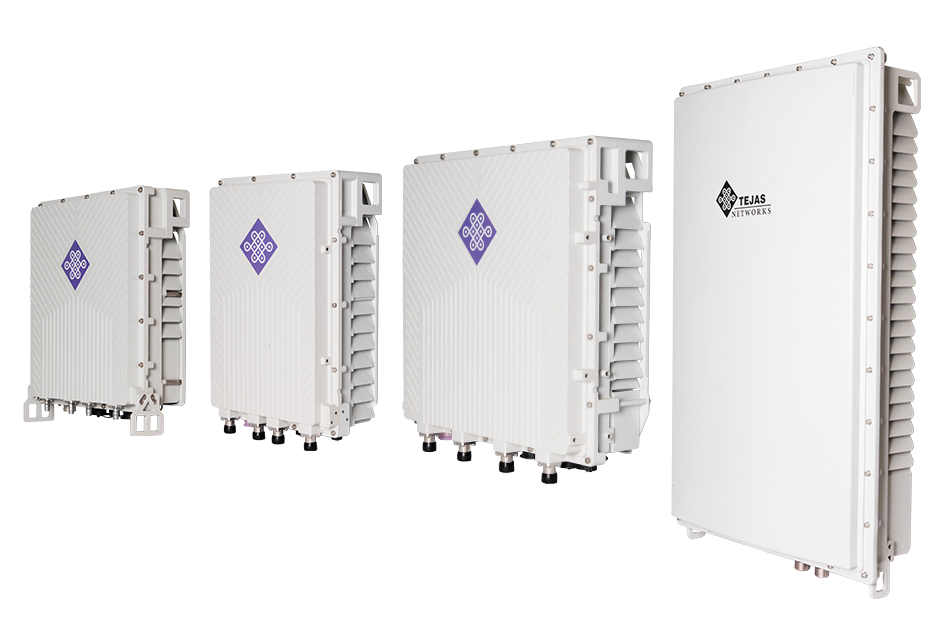
WavePlexusTM 4G/5G Radio Units, RRH and Massive MIMO Active Antenna Systems

Tejas 4G/ 5G Radio Units

Frequently asked questions

How is the role of the Radio Access Network (RAN) changing in 5G and beyond?

The role of the RAN is expanding beyond basic radio connectivity to become a more intelligent and adaptive part of the network. In 5G and 5G Advanced, the RAN increasingly supports differentiated services, low latency applications, and enterprise use cases, while future generations are expected to rely more heavily on software control, distributed processing, and tighter integration with transport and compute resources.

RAN disaggregation is an important architectural direction, but it is not the dominant deployment model across all networks. Many operators continue to use integrated architectures while selectively adopting distributed or disaggregated models in specific scenarios where flexibility, scalability, or multi-vendor interoperability is beneficial. As a result, modern networks often combine traditional and disaggregated approaches.

Capabilities such as network slicing, dynamic spectrum sharing, and support for new service categories place greater demands on flexibility and coordination within the RAN. These capabilities require architectures that can adapt dynamically, support traffic with different performance requirements, and integrate closely with transport and core networks to deliver consistent end to end behavior.

As networks grow in scale and complexity, manual optimization becomes impractical. The use of AI and machine learning based techniques enables automated optimization of radio resources, energy consumption, and performance. In 5G Advanced and beyond, intelligence is expected to play a central role in making RANs more efficient, responsive, and easier to operate.

Modern RANs must support an expanding range of devices and service profiles, including reduced capability (RedCap) devices, industrial and enterprise endpoints, and large numbers of low power IoT connections. Emerging concepts such as Ambient IoT further extend these requirements, influencing how RANs balance coverage, capacity, and energy efficiency.

Transport infrastructure is a critical enabler of RAN performance, carrying traffic and timing information between radio units, processing elements, and aggregation points. As RAN architectures become more distributed, transport networks must deliver deterministic performance, precise synchronization, and scalable capacity to support advanced radio features and evolving deployment models.

Non-Terrestrial Networks extend mobile coverage using satellite and aerial platforms, complementing terrestrial RAN deployments. Supporting NTN introduces additional considerations for latency, synchronization, and integration with existing network infrastructure, highlighting the need for flexible and robust architectures across both radio access and transport domains.

National-scale RAN deployments require solutions that perform consistently across highly varied environments — dense urban centers, suburban corridors, rural stretches, and specialized settings such as underground or industrial sites. Beyond radio performance, interoperability, supply chain reliability, and long-term serviceability become equally critical. Operators need equipment that can be delivered at volume, interoperable, and sustained through the full deployment and maintenance lifecycle — while remaining adaptable to future technology evolution without requiring wholesale infrastructure replacement.

Recommended for You

Scroll to Top