Fiber Broadband Access Solutions

Tejas Networks offers advanced fiber broadband access solutions based on xPON technology, featuring high‑performance OLT and ONT platforms for diverse deployment scenarios. Designed for residential and urban gigabit services, enterprise and campus networks, smart city infrastructure, and industrial connectivity, these solutions deliver fast, scalable, and reliable broadband access.

Fiber broadband access forms the foundation of modern fixed network infrastructure, delivering high-capacity, low-latency connectivity directly to homes, businesses, and industrial endpoints. Built on passive optical network (PON) technology, fiber broadband access solutions replace legacy copper and hybrid fiber‑copper infrastructures with end-to-end fiber, enabling operators to meet growing demands for speed, reliability, and service quality.

As broadband consumption continues to rise — driven by video streaming, remote work, cloud and AI applications, and connected devices — access network architectures are evolving to deliver higher per-user throughput, greater port density, and more efficient use of fiber infrastructure. The transition from GPON to XGS-PON and the emerging adoption of 50G HSPON reflect an industry-wide shift toward multi-gigabit capable access networks.

This evolution not only increases capacity but also improves fiber utilization, supporting higher split ratios and enabling multiple PON technologies to coexist on the same fiber infrastructure—allowing incremental upgrades without major changes to the outside plant.

Modern fiber access platforms must support a wide range of deployment scenarios—from dense urban broadband to industrial environments and rural connectivity. At the same time, operators are increasingly focused on simplifying operations through centralized management, automation, and flexible deployment models that can scale across geographically distributed networks.

Fiber broadband access networks are expected to evolve toward higher line rates, deeper integration with mobile and fixed-wireless access layers, and greater reliance on software-driven provisioning and analytics. These developments will play a central role in enabling next-generation connectivity across urban, suburban, and underserved rural environments.

Tejas Networks provides fiber broadband access solutions designed to support scalable deployment, multi-technology flexibility, and reliable performance across diverse operator and subscriber environments.

Key Highlights

Flexible OLT Portfolio
A range of OLT platforms from compact pizza-box form factors to scalable modular chassis supporting 4 to 128 ports, enabling right-sized deployments across scenarios.

Comprehensive ONT Range
Supports residential, enterprise, and industrial ONTs with bridge, Wi-Fi, and SFP variants.

Multi-PON Technology Support
Supports GPON, XGS-PON, and Combo PON on a unified platform, with a clear upgrade path to 50G HSPON, protecting infrastructure investment as capacity demands evolve.

Resilient Access Network Design
Supports robust protection mechanisms across access and aggregation layers—such as LAG, ERPS, and Type‑B PON—ensuring service continuity in large-scale fiber deployments.

Unified NMS Supporting Multiple Technologies
A unified network management system supports multi-technology visibility and control, simplifying operations across heterogeneous access network environments.

Multi-vendor Interoperability
Validated interoperability with major third-party vendors ensures operators can deploy in multi-vendor environments without compromising service quality or management capability.

Products

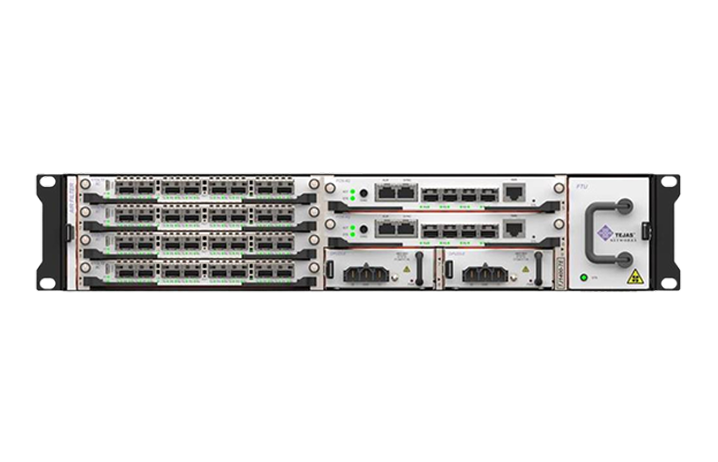
TJ1400-7E Modular HS‑PON OLT

2RU Ultra-dense HS-PON ready OLT

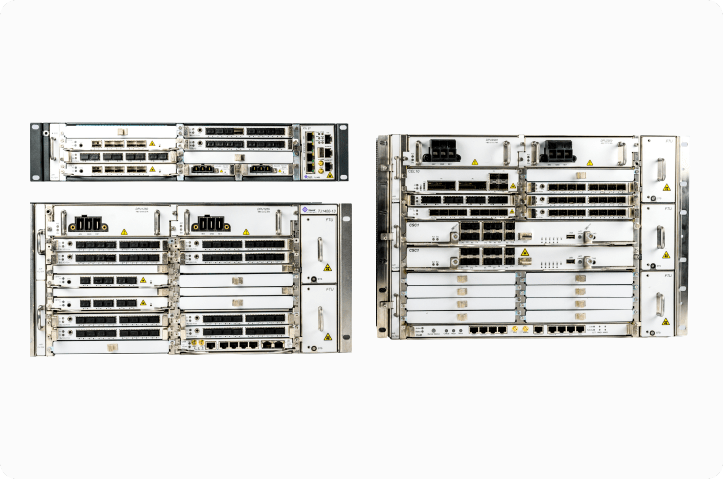
TJ1400-1 Pizzabox OLT

Pizza box GPON/XGS-PON/Combo PON OLT

TJ1400 Modular OLT

GPON/XGS-PON/Combo PON based Fiber Access

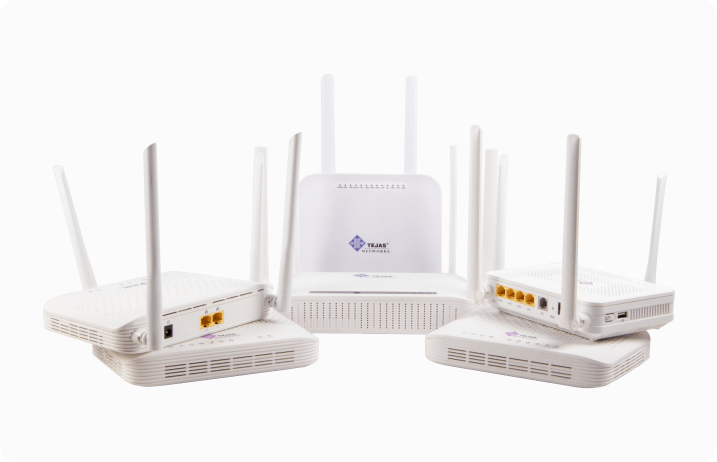
TJ2100N GPON/ XGS-PON ONT

High-performance residential, enterprise and industrial ONT

Frequently asked questions

What is driving the global expansion of fiber broadband access networks?

The expansion of fiber broadband access is driven by sustained growth in data consumption, increasing reliance on cloud services and video applications, and the limitations of legacy copper and hybrid access technologies. Governments and operators globally are investing in fiber infrastructure to close the digital divide, support economic development, and provide the connectivity foundation required by modern households, businesses, and public institutions.

Passive optical networks use a point-to-multipoint fiber architecture in which a single optical line terminal at the exchange serves multiple subscriber endpoints through a passive optical splitter, with no active electronics in the outside plant. This architecture reduces infrastructure cost, lowers power consumption compared to active distribution networks, and provides a scalable foundation for delivering high-bandwidth services over long distances.

GPON delivers downstream and upstream speeds of up to 2.5 Gbps and 1.25 Gbps respectively and remains widely deployed for residential broadband. XGS-PON delivers symmetrical 10 Gbps throughput, making it better suited for enterprise services, dense residential deployments, and scenarios where upstream capacity is a constraint. Operators typically consider upgrading when subscriber bandwidth demands approach GPON capacity limits or when symmetrical multi-gigabit services become a commercial priority.

An OLT can support multiple subscribers per port through a shared PON architecture, with split ratios typically ranging from 1:32 to 1:64 per port in practical deployments and extending up to 1:128 depending on design and service requirements.

The optimal number of subscribers depends on factors such as bandwidth demand per user, service mix, distance from the OLT, and the PON technology used (e.g., GPON or XGS‑PON). Higher split ratios allow more subscribers per port but require careful capacity planning and traffic management to maintain service quality. As a result, operators balance subscriber density, performance requirements, and cost efficiency when designing access networks.

50G PON, also referred to as HSPON, represents the next major step in passive optical network evolution, delivering substantially higher per-port capacity to support future bandwidth demands. It is designed to coexist with existing GPON and XGS-PON deployments, allowing operators to upgrade capacity incrementally on the same fiber infrastructure rather than requiring wholesale replacement of outside plant assets.

Smart city and industrial applications require connectivity that combines high bandwidth with low latency, reliability, and support for diverse endpoint types. Fiber broadband access infrastructure addresses these requirements by extending high-capacity connectivity to traffic systems, public infrastructure, industrial facilities, and campuses, often using ruggedised ONT variants designed for outdoor or harsh environment deployment.

Large-scale fiber broadband deployments require consistent performance across geographically and demographically varied environments, from dense urban areas to rural and remote locations. Beyond technology selection, programme-scale rollouts depend on supply chain reliability, the ability to support multiple deployment models — including operator-owned, wholesale, and open access architectures — and long-term vendor support across the full deployment and operational lifecycle.

Recommended for You

Scroll to Top