Optical Aggregation Solutions
Optical aggregation plays a critical role within modern packet optical transport networks, enabling high‑capacity, low‑latency connectivity across access, metro, and regional domains. It enables the efficient movement of massive volumes of data between network nodes, data centers, and service endpoints, supporting everything from broadband and mobile networks to cloud and enterprise services.
As network traffic continues to grow and usage patterns evolve, optical transport architectures have adapted to deliver greater scalability, flexibility, and operational efficiency. Advances in coherent optical technologies, higher line rates, and flexible network designs have enabled operators to scale capacity while optimizing fiber utilization across diverse deployment scenarios.
Today, optical transport is increasingly shaped by the need for programmability, automation, and seamless integration with higher network layers. Emerging trends such as coherent pluggable optics, IP optical integration, and software-driven control are redefining how optical networks are planned, deployed, and operated.
Looking ahead, optical transport networks are expected to evolve toward even higher capacities, improved energy efficiency, and greater levels of intelligence and automation. These developments will play a critical role in supporting future service demands driven by 5G and beyond, cloud native applications, artificial intelligence workloads, and expanding data center interconnect (DCI) requirements.
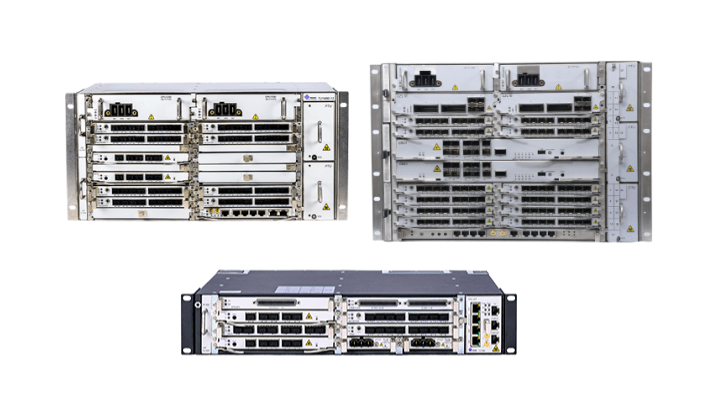
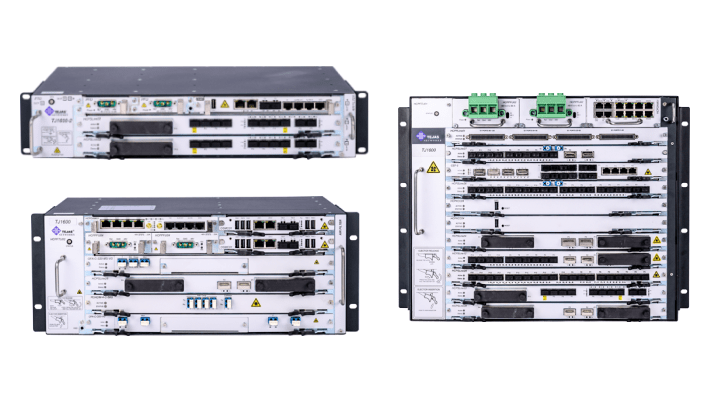
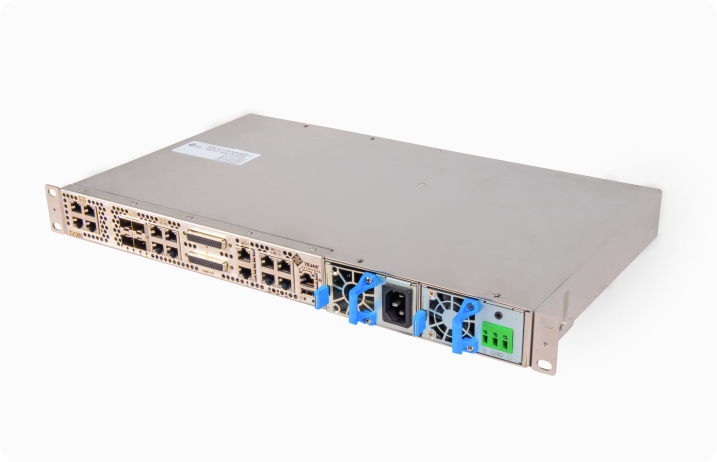
Tejas Networks provides optical aggregation and transport capabilities that support scalable, high‑capacity connectivity across metro, regional, and backbone networks.
Key Highlights
Scalable from Megabits to Terabits
Scales from access to multi‑terabit aggregation with support for high‑capacity packet, OTN, and DWDM transport across network layers.
Multi‑Technology Convergence on a Single Platform
Integrates packet, optical, broadband access, and legacy technologies on a unified platform, reducing footprint and simplifying network design.
Software‑Defined, Modular Architecture
Built on a software‑defined hardware architecture with modular interfaces, enabling in‑service upgrades and long‑term technology evolution.
Carrier Ethernet and Advanced Packet Transport
Supports Carrier Ethernet, MPLS, and OTN switching with traffic engineering, QoS, and synchronization for mobile backhaul and enterprise services.
Flexible Deployment and Configuration Options
Offers multiple configurations, form factors, and interface combinations to optimize deployments across access, aggregation, and metro networks.
Integrated DWDM and ROADM Capabilities
Supports DWDM transport and multi‑degree ROADM for efficient fiber utilization and seamless scaling across metro, regional, and long‑haul networks.
Frequently asked questions
Why is optical transport becoming more critical in the era of 5G, cloud, and AI workloads?
Traffic growth driven by 5G expansion, cloud native applications, hyperscale data centers, and AI workloads is placing unprecedented demands on transport networks. Optical transport provides the scalable bandwidth, low latency, and deterministic performance needed to interconnect radio networks, core infrastructure, and distributed data centers efficiently
How is traffic growth changing optical network design today?
Unlike earlier growth driven mainly by consumer broadband, today’s traffic is more dynamic and asymmetric, driven by cloud services, distributed data centers, and AI training and inference workloads. This is pushing optical networks toward higher line rates, more flexible capacity scaling, and architectures that support rapid growth without proportional increases in fiber or power consumption.
What role do coherent pluggable optics play in modern optical transport networks?
Coherent pluggable optics are reshaping optical architectures by enabling higher levels of flexibility in how capacity is deployed. They allow operators to adopt modular and scalable designs, reduce operational complexity, and support closer integration between optical and packet layers, particularly in metro and data center interconnect scenarios.
Why is automation becoming essential in optical transport operations?
As optical networks increase in scale and complexity, manual planning and provisioning become inefficient and error prone. Automation enables faster service turn up, dynamic capacity optimization, and improved fault management, helping operators maintain performance while reducing operational effort and time to deploy new services.
How does energy efficiency influence optical transport evolution?
Energy efficiency is a key consideration as networks scale to higher capacities. Innovations in optical components, higher bit rate wavelengths, and more efficient system designs help reduce power consumption per transported bit, supporting sustainability goals while accommodating continued traffic growth.
How is optical transport adapting to metro and edge network densification?
With the densification of access and edge networks—driven by mobile, enterprise, and edge compute deployments—optical transport must support shorter reach, higher node counts, and more dynamic traffic patterns. Modern metro optical architectures emphasize flexibility, compact form factors, and efficient aggregation across multiple access points.
What is driving convergence between optical and packet transport networks?
The convergence of optical and packet transport layers helps simplify network architectures, improve resource utilization, and reduce operational silos. This convergence is increasingly enabled by software control and optical technologies that align capacity scaling with packet layer demands, improving overall network agility.