
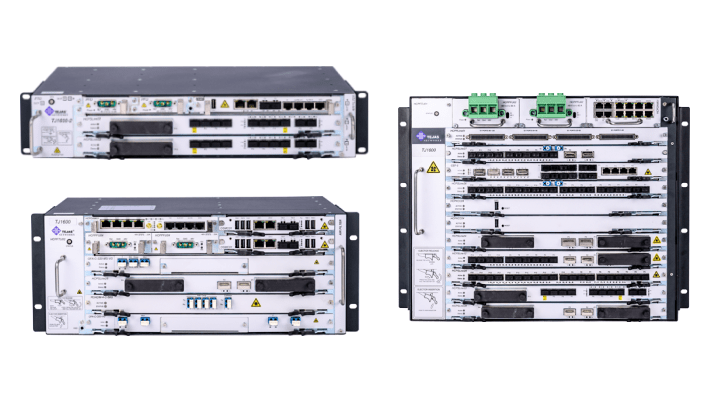
Metro Core and Backbone Network Solutions
Designed for service providers, data centers, large enterprises, and wholesale carriers, TJ1600 supports diverse use cases including mobile backhaul, data center interconnect, business connectivity, and utility infrastructure.
Metro, core, and backbone optical networks form the high‑capacity foundation of modern digital infrastructure, enabling large‑scale transport of data across cities, regions, and international routes. These networks interconnect data centers, aggregation layers, and long‑haul systems, carrying large traffic volumes with strict requirements on performance, reliability, and efficiency.
While access and aggregation layers are optimized for service flexibility and edge connectivity, metro and backbone networks are designed for high‑capacity transport and efficient utilization of fiber resources. DWDM and Optical Transport Network (OTN) enable multiple high‑speed wavelengths to be transmitted over a single fiber pair, allowing operators to significantly increase throughput without expanding physical infrastructure. OTN further provides switching, grooming, and performance monitoring capabilities, enabling efficient handling of mixed service traffic at scale.
Optical transport technologies have evolved significantly to address growing capacity demands. Networks have transitioned from fixed‑grid DWDM systems with discrete wavelength increments to flexible, high‑capacity coherent optical architectures capable of scaling from 100G to multi‑hundred‑gigabit and terabit wavelengths. Advances in digital signal processing, higher‑order modulation, and flexible allocation of optical spectrum have enabled operators to increase capacity per fiber while improving efficiency. Interoperability with existing infrastructure, including support for alien wavelengths, is becoming increasingly important in multi‑vendor environments.
Tejas Networks provides metro and backbone optical transport solutions designed to deliver high‑capacity, efficient, and resilient data transport, enabling operators to scale network infrastructure while optimizing cost and operational complexity.
Key Highlights
One-stop Scalable Solution, from Access to Backbone
Hyper Scalable Packet OTN DXC
Versatile Mix of Services from E1/GE/10GE/100GE TO OTUCn
64T on a Fiber Pair (C+L Band)
1.2T/Wavelength for Future-Ready Transport
100G/ 400G/ 600G/ 800G Alien Wavelength
Products
TJ1600 OTN/DWDM Optical Transport
Building Efficient Access, Metro and Core Networks
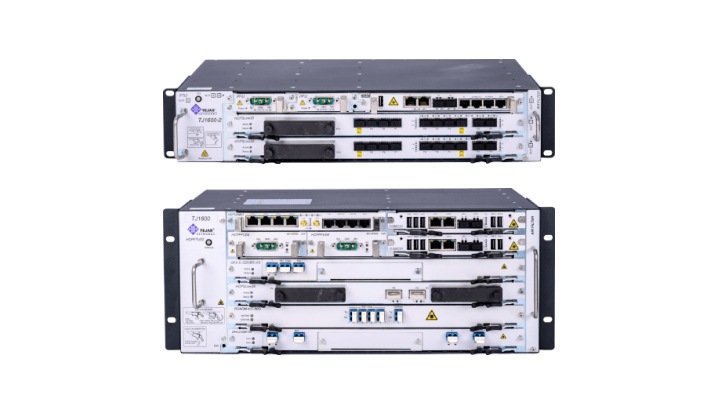
TJ1600 Micro-OTN
Ultra Versatile Compact Platform
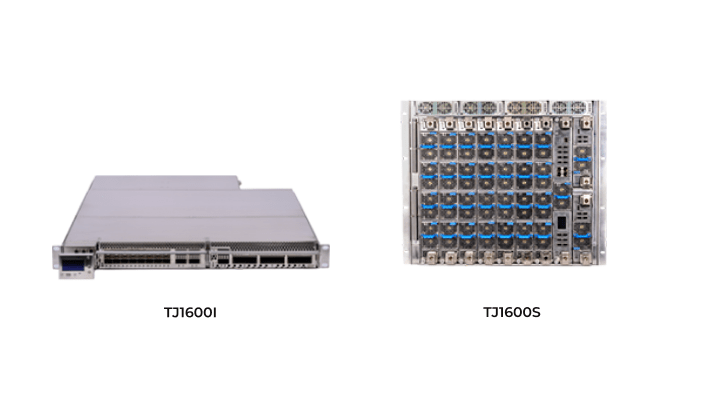
TJ1600 Core Switch
Hyperscale Disaggregated Optical Transport & Switching
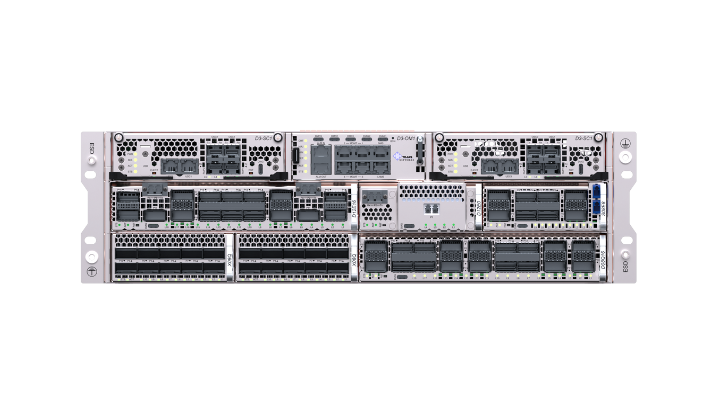
TJ1600-D3
TJ1600-D3 DWDM Platform - hyper-scalable product for a wide range of connectivity applications

Frequently asked questions
What is the role of metro and backbone optical networks in modern infrastructure?
Metro and backbone networks provide high‑capacity transport between aggregation layers, data centers, and long-haul systems. They enable efficient movement of large volumes of data across cities and regions, supporting cloud services, mobile networks, and enterprise connectivity at scale.
How do DWDM technologies increase network capacity without adding new fiber?
DWDM (Dense Wavelength Division Multiplexing) enables multiple optical wavelengths to be transmitted over a single fiber pair. Each wavelength acts as an independent high‑speed channel, allowing operators to scale capacity significantly without deploying additional fiber infrastructure.
What is OTN and how does it relate to DWDM?
DWDM provides the optical layer that carries multiple wavelengths over fiber, while OTN (Optical Transport Network) adds a digital switching and management layer on top. OTN enables traffic grooming, monitoring, and multiplexing of services, enabling efficient transport of diverse services over DWDM infrastructure.
Why is traffic grooming important in metro and core networks?
Traffic grooming allows smaller data streams to be combined into higher‑capacity channels, improving bandwidth utilization. This helps operators avoid underutilized wavelengths and optimize the use of expensive optical resources, especially when traffic demand is uneven or varies across services and locations.
What is flexible grid (flex‑grid) in optical networks, and why is it important?
Flex‑grid allows optical spectrum to be allocated dynamically rather than using fixed wavelength spacing. This enables more efficient use of available spectrum and supports higher data rates by allocating wider channels when needed. Flex‑grid is important for scaling capacity while maximizing the utilization of existing fiber infrastructure.
What does “colorless, directionless, contentionless” (CDC) mean in optical networks?
CDC refers to flexible ROADM (Reconfigurable Optical Add‑Drop Multiplexer) architectures that simplify how wavelengths are deployed and managed:
– Colorless means any wavelength can be assigned to any port, without requiring fixed wavelength-specific hardware.
– Directionless means a wavelength can be routed in any direction across the network, rather than being tied to a specific path.
– Contentionless means multiple wavelengths — including multiple instances of the same wavelength — can be added or dropped at a node without competing for the same switching resources, avoiding blocking and enabling flexible provisioning.
Together, these capabilities enable operators to reconfigure networks more easily, adapt to changing traffic demands, and reduce manual intervention.
What are alien wavelengths and why are they important?
Alien wavelengths are optical signals generated by one vendor’s equipment and transported over another vendor’s DWDM system. They allow operators to upgrade or expand networks selectively without replacing existing infrastructure, improving flexibility in multi‑vendor environments.
How do operators scale capacity in high‑growth network environments?
Operators scale capacity using a combination of approaches that increase how much data can be carried on existing fiber infrastructure. This includes deploying higher‑speed wavelengths (for example, moving from 100G to 400G and beyond), adding more wavelengths per fiber, and using advanced modulation techniques to improve spectral efficiency.
In addition, modern optical systems allow capacity to be expanded incrementally—adding bandwidth only where required—without disrupting existing services. This enables operators to match capacity
growth with actual traffic demand while optimizing network investments and avoiding unnecessary overbuild.